My Vet Told Me To Stop Wasting Money On Joint Chews. Then She Had Me Close My Eyes And Listen To My Dog Walk.
There's a reason joint chews, soft beds and X-rays don't get an older dog back up the stairs. A South Florida vet explains the one thing they all miss, plus a 10-second test you can do on your kitchen floor tonight.
Every morning last year started the same way, and every morning it broke my heart a little more. 💔
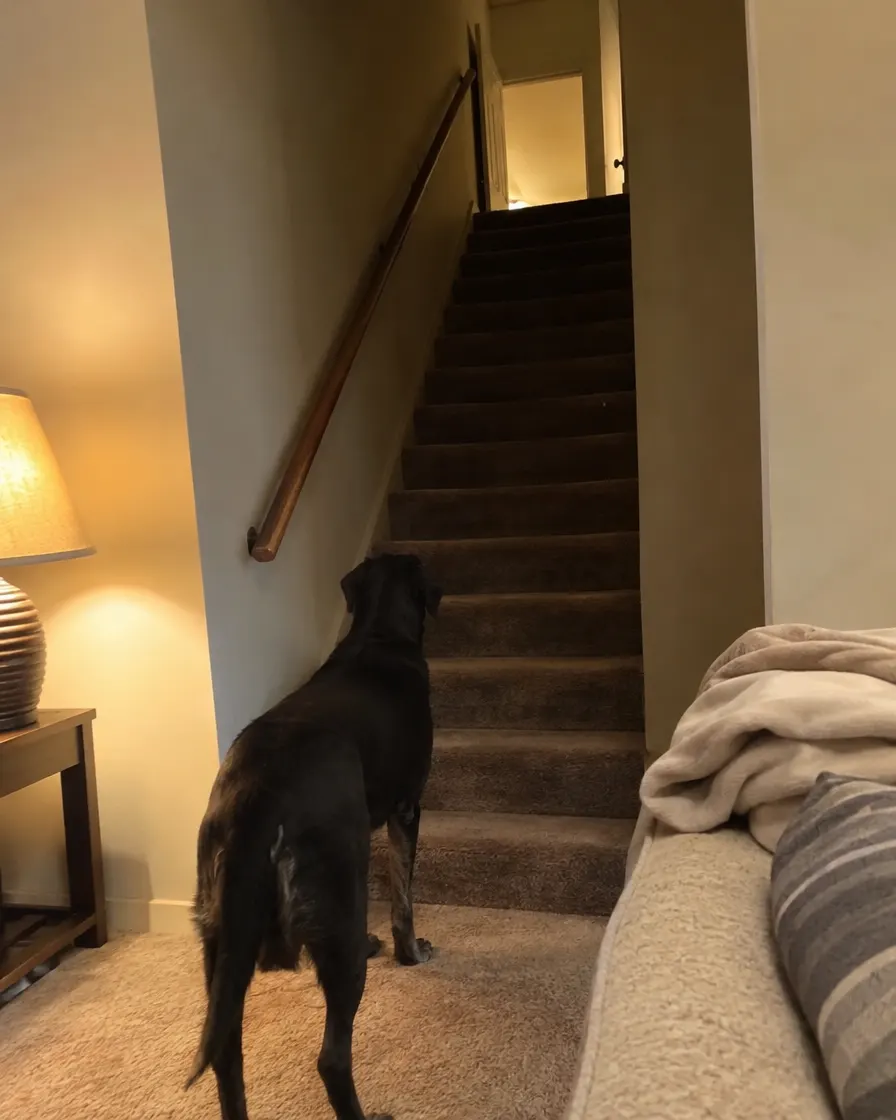
My Lab, Tucker, would hear me on the stairs, and his tail would start thumping against the floor. He wanted so badly to come say good morning.
Then Tucker would try to stand up. His front legs came up first. His back legs slid on the floor, and he sat back down. It took Tucker two or three tries to get all the way up, and he looked up at me like he was embarrassed.
I would stand there holding my coffee, trying not to cry in front of him.
During the day, Tucker tried to follow me from room to room, the way he had since he was a puppy. On the kitchen tile, his back legs slid out from under him, so he gave up and flopped down by the back door. I could hear him sigh from the next room.
On car rides, I had to lift all 70 pounds of him into the back seat. Tucker used to jump in before I even had the door all the way open.
The nights were the worst. 😢 Tucker couldn't climb the stairs to my room anymore. Some nights he stood at the bottom step and whined until I came down. More than once, I slept on the couch with my hand on his back so he wouldn't be alone.
Tucker wasn't sick. He wasn't hurt. He was eight.
Tucker had been stuck like this for eight months.
We Were Stuck In A Cycle: Slow Mornings, Shorter Walks, Lonely Nights
I felt like I was losing my best friend years too early. Some nights I sat on the kitchen floor next to Tucker and cried where the kids couldn't see.
My kids stopped asking to take him to the park. They knew he'd just lie down.
Every time Tucker needed a second try, I felt guilty, like I had missed something.
I Tried Everything I Was Told To Try, But Nothing Got Him Back Up The Stairs
I did what I thought a good dog owner does.
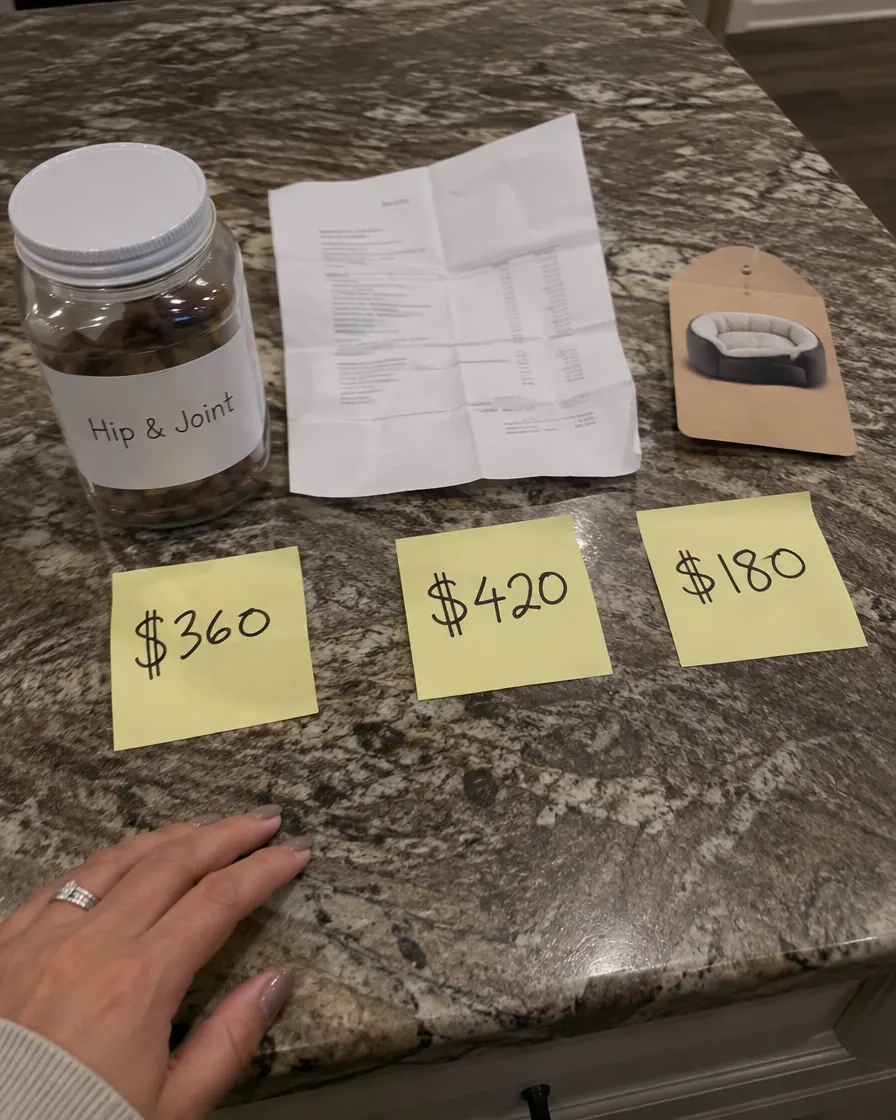
First I bought joint chews. They cost $45 a jar, and Tucker got one every morning for eight months. Eight empty jars later, he still needed three tries to stand.
Next I paid $420 for a vet visit and X-rays. Our regular vet looked at every X-ray and said nothing was broken. "He's just getting older," he told me. "Keep him comfortable."
So I bought Tucker a memory foam bed for $180. He slept on it every night. He still couldn't get up off it.
I had spent $960, and Tucker was getting worse. I started to accept that this was just what eight looks like.
I Was Scared I Was Watching The Beginning Of The End
My neighbor's old Lab, Duke, went the same way. Duke's owner told me it started exactly like this: slow mornings, then the stairs, then the car. One day Duke stopped trying to get up at all.
First we cancelled Tucker's doggy daycare. Then we stopped going to the dog park, because Tucker would just lie down and watch the other dogs run.
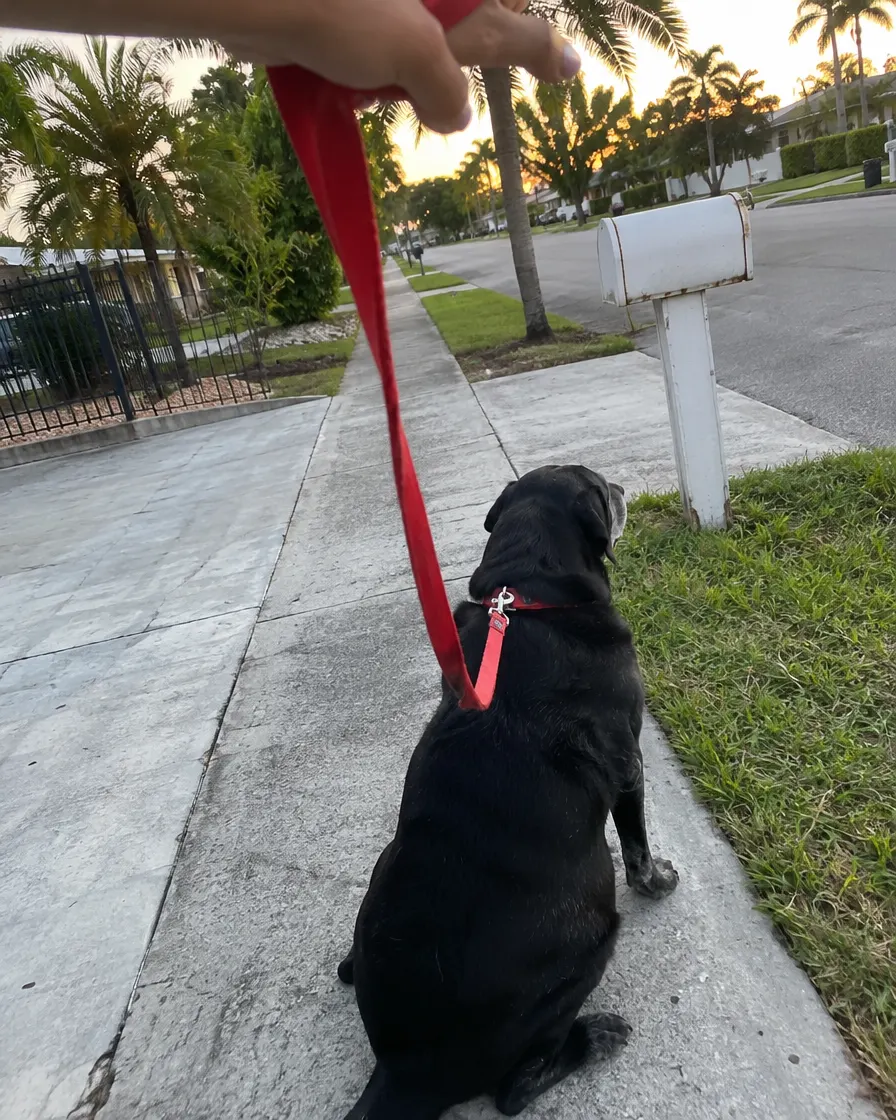
In August, Tucker sat down at the mailbox at the end of our driveway and wouldn't walk any farther. We stopped our daily walks after that.
Tucker wasn't running anymore. He wasn't playing anymore. He wasn't really living anymore.
I Couldn't Keep Watching Tucker Give Up... So I Found A Different Kind Of Vet
I was flooded with tips that contradicted each other. The workers at the pet store told me to buy a stronger joint chew. A dog forum said chews were a waste of money and to sign him up for therapy sessions at $90 a visit. A neighbor swore therapy was the waste of money.
So I stopped asking around. Back when we still went to the dog park, the other owners told me about Dr. Sarah Combs. She got their stiff dogs moving again.
Dr. Combs isn't like other vets. She used to run a pet rescue, so she has cared for a lot of the old, stiff dogs other people gave up on.
"Most of my rescue dogs came in with a note that said 'too old,'" she told me. "Once I watched them walk, a lot of them weren't too old at all. Something else was keeping them down."
Dr. Combs has been a vet in South Florida for 10 years. "I've watched hundreds of stiff dogs walk across this floor," she told me. "I've seen every joint chew on the market come and go."
Dr. Combs is also the one who showed me the 10-second test. I'll show you in a minute.
I handed her Tucker's X-rays. Dr. Combs set them down without opening them.
"An X-ray shows his bones while he lies still," Dr. Combs said. "It can't show what happens to his legs when he walks."
"In my first year of practice, I looked at the X-rays first too," Dr. Combs said. "I told a lot of owners their dog was just getting older. They went home and spent what you spent on joint chews, X-rays and soft beds."
Then Dr. Combs asked me to do something nobody had ever asked me to do.
"Walk Tucker across my tile floor," Dr. Combs said. "This time, close your eyes and just listen."
What I Heard With My Eyes Closed
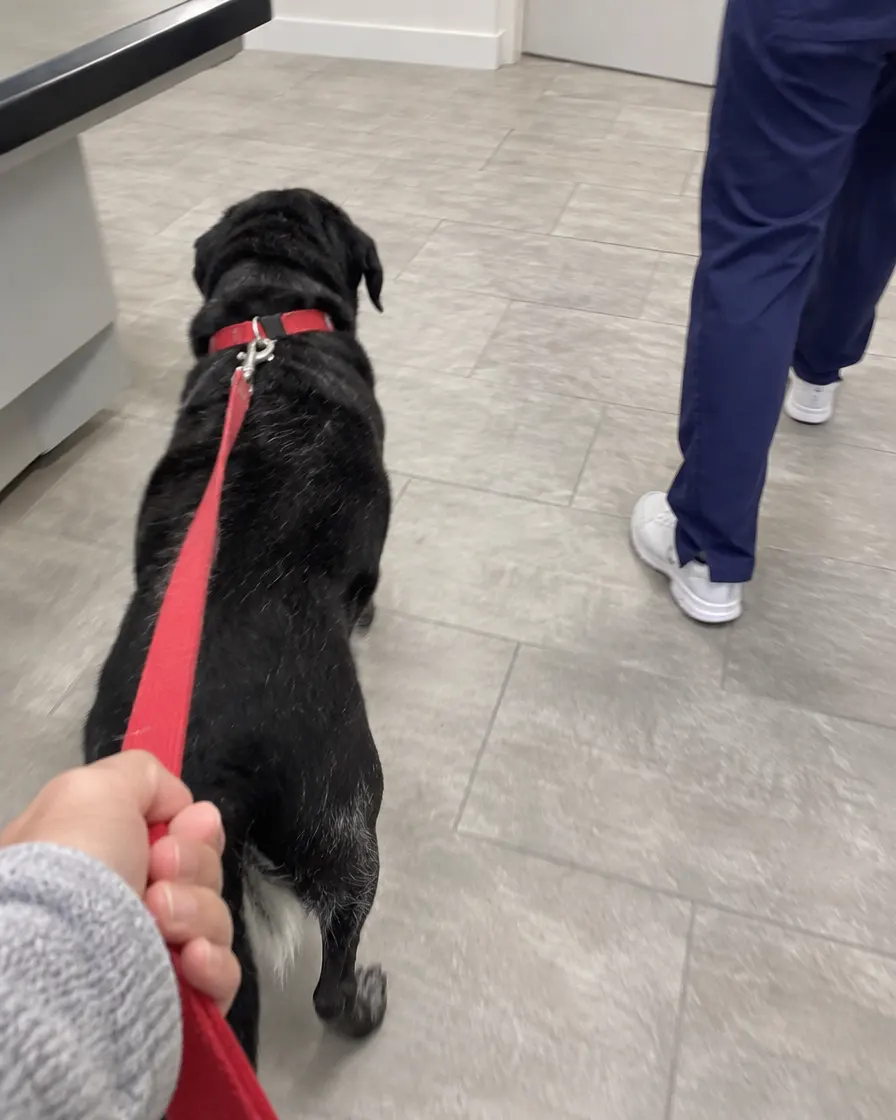
Click. Click. Click.
"Do you hear that?" Dr. Combs asked. "That click is Tucker's nails hitting my tile before his pads do."
"You can stop buying the jars," Dr. Combs said. "Every joint chew you've tried failed for the same reason. A chew works on the inside of his joints. But the pressure on Tucker's joints starts outside, where his nails hit the floor. No chew, and no therapy session, can reach his nails."
"The problem isn't his hips, his age or his bed. It's something almost nobody checks. I call it nail-first walking."
Listening for that click is the 10-second test I promised you.
What Nail-First Walking Does To A Dog's Legs
Dr. Combs stood Tucker still and pointed at his front paw. Tucker's long nails were pressing hard into the tile, and his toes were tipped up off the floor.
"Every step, the floor pushes those long nails to the side," Dr. Combs said. "That bends his toe joints sideways inside his paw."
"A bent toe joint pushes the joint above it out of its natural position. Then the next joint shifts, all the way up his legs to his shoulders and his hips."
I was shocked. But honestly, I felt relieved.
For the first time, someone had explained exactly why Tucker couldn't get up, instead of handing me another jar.
"Is it too late for Tucker?" I asked her.
"Not yet," Dr. Combs said. "Depending on his weight, a dog has one to three years of long nails before the shift in his joints passes the point of no return."
But Dr. Combs Didn't Stop There
"Long nails on a dog are NOT natural," Dr. Combs said. "Mother Nature designed dogs to have short nails."
"In the wild, your dog's ancestors used to dig all day long. They dug dens to sleep in, holes to bury their food and cool spots to lie in. Every few minutes, their front paws scraped hard, rocky ground, and that kept their nails short without anyone ever touching them."
"Then we brought dogs inside," Dr. Combs said. "We gave them soft beds, smooth floors and grassy yards, and we took away the rough ground that kept their nails short."
"But the digging never left them," Dr. Combs said. "Does Tucker ever scratch at a door when he wants to come in?"
Tucker scratched at the kids' bedroom door every single night until they let him in. I had yelled at him for the scratches in the paint more times than I could count. 🙈
"Tucker is trying to dig, the way his body was built to," Dr. Combs said. "But a painted door can't take anything off his nails. All he does is ruin your door."
"So Tucker's nails keep growing, and every step on your tile hurts a little more. He just can't tell you."
"Can't I just get his nails trimmed, or walk him on the sidewalk?" I asked.
"A trim only takes off the very tip, so his nails are still long when you get home. A sidewalk only taps his nails, so it never files them down," Dr. Combs said. "Tucker needs rough ground to dig at every day, right inside your house."
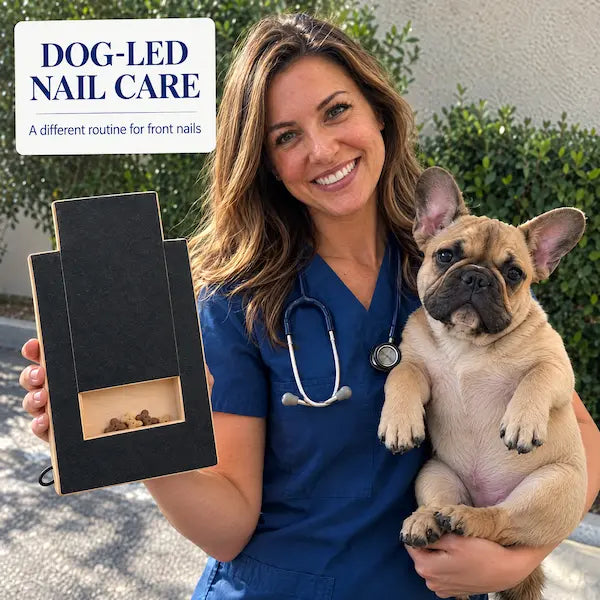
Then Dr. Combs walked over to a cabinet and took out a flat wooden board with a rough black top.
"This scratch board has helped hundreds of my patients," Dr. Combs said. "I don't usually tell owners to buy anything. But this one gives a dog back the digging he was built for, right on your kitchen floor."
The board was called the ClawBud scratch board.
Dr. Combs explained that it was designed by a team of dog owners who found the real reason their own dogs got stiff.
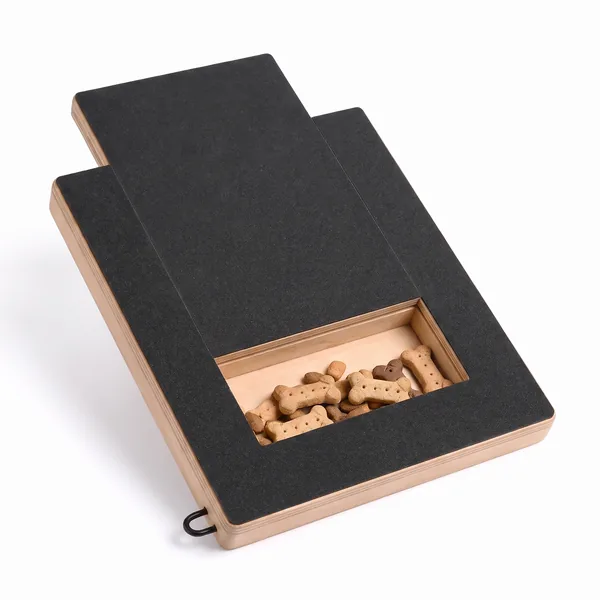
They engineered the rough black top to file a dog's nails the same way rocky ground filed his ancestors' nails. A treat hides under a sliding panel in the middle, so Tucker digs at the board to get it. Every dig files a little off each front nail.
A little filing every day is the one thing joint chews, soft beds and trims can never do.
"Nobody has to hold his paw," Dr. Combs said. "Tucker will think it's treat time. And he'll dig at this instead of your door."
Ordering That Scratch Board Was One Of The Best Things I've Ever Done For Tucker. Today He Acts Like A Different Dog.
The second and third tries, gone.
The first night, Tucker dug at the scratch board until the treat came out. Then he sat and stared at me for another one.
About three weeks in, the click on our kitchen floor got softer. By week six, Tucker got up off that same $180 bed on the first try.
Now Tucker hears me on the stairs in the morning, and he's up before I reach the bottom step, tail going. I still tear up over my coffee sometimes, but now it's the happy kind. ❤️🐾
Tucker jumps into the back seat of the car before I even have the door all the way open, just like he used to.
Tucker trots across the kitchen tile, and his back legs stay right under him. No more click. Just soft, quiet steps across the tile.
Tucker doesn't scratch up the kids' bedroom door anymore. When he wants to dig, he goes straight to his scratch board. I haven't had to yell at him once since.
My kids fight over who gets to take Tucker to the park again. Last Saturday he ran circles around them until they gave up before he did. 😂
Tucker is back at doggy daycare, running with the other dogs instead of lying down to watch them.
Tucker pulls me right past the mailbox and all the way around the block.
And at night, Tucker climbs the stairs and sleeps at the foot of my bed again. The first night he made it to the top on his own, I sat down on the top step and cried into his fur.
I didn't know how much I missed hearing him breathe next to me.
At Tucker's eight-week checkup, Dr. Combs pointed at the same front paw. This time his nails weren't pressing into the floor. His toes and pads sat flat on the tile.
The only time I remember how bad it got is when we stayed at my sister's for two weeks and forgot his scratch board.
By the second week, I heard the click again, and Tucker needed two tries to get up. The night we got home, I put his scratch board right back on the kitchen floor.
I thought I was losing my best friend to old age. I got him back for his golden years.
If your dog is still stiff on the chews, a ClawBud scratch board needs to be on your floor.
See If The Black Friday Price Is Still On →
Here's How It Works
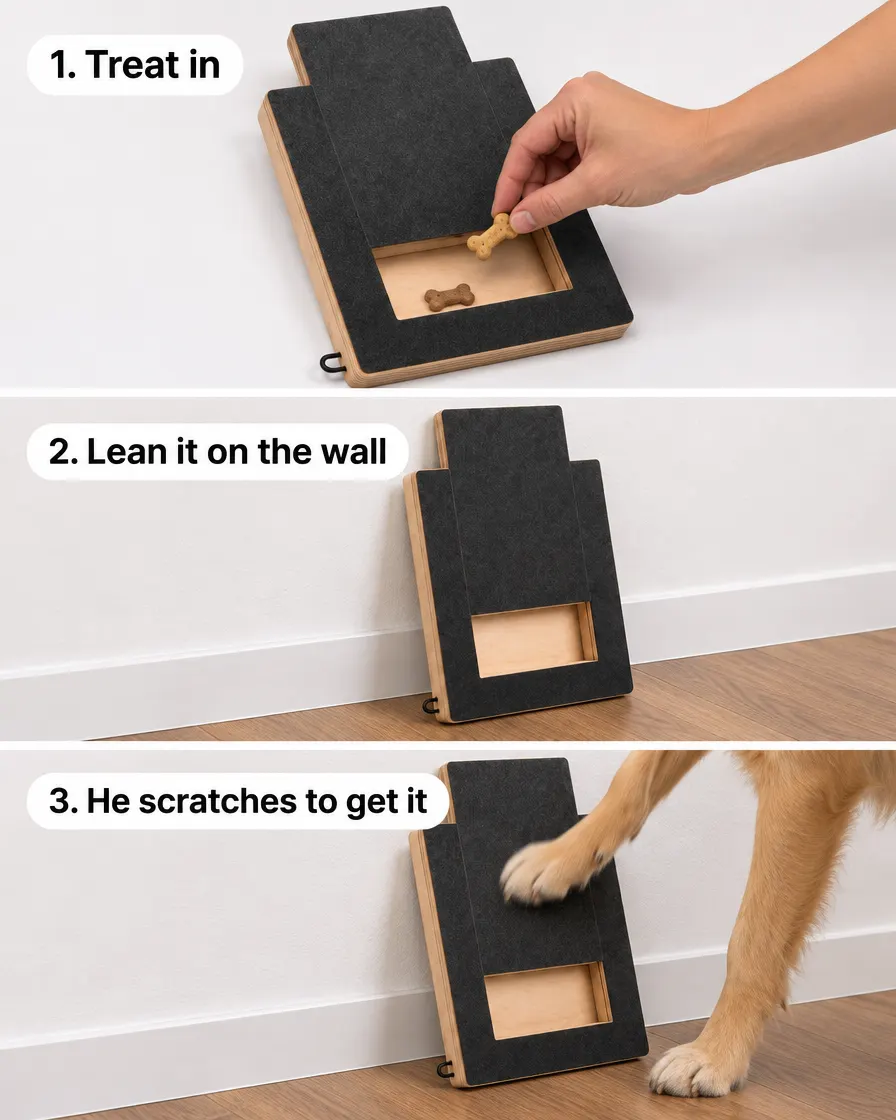
Slide the panel open and drop a treat in the compartment. Your dog smells it and digs at the scratch board to reach it.
The rough top takes a little off his front nails with every dig, a few minutes a day. As his nails get short, his toes sit flat and the click on the floor goes away.
Plain scratch boards don't work, because a dog scratches once, finds nothing there for him and walks away. But because of the treat compartment, dogs have a reason to dig at the ClawBud scratch board every day.
There are no clippers, and nobody holds his paw. It's made for the dog who is still on joint chews and still needs more than one try to get up.
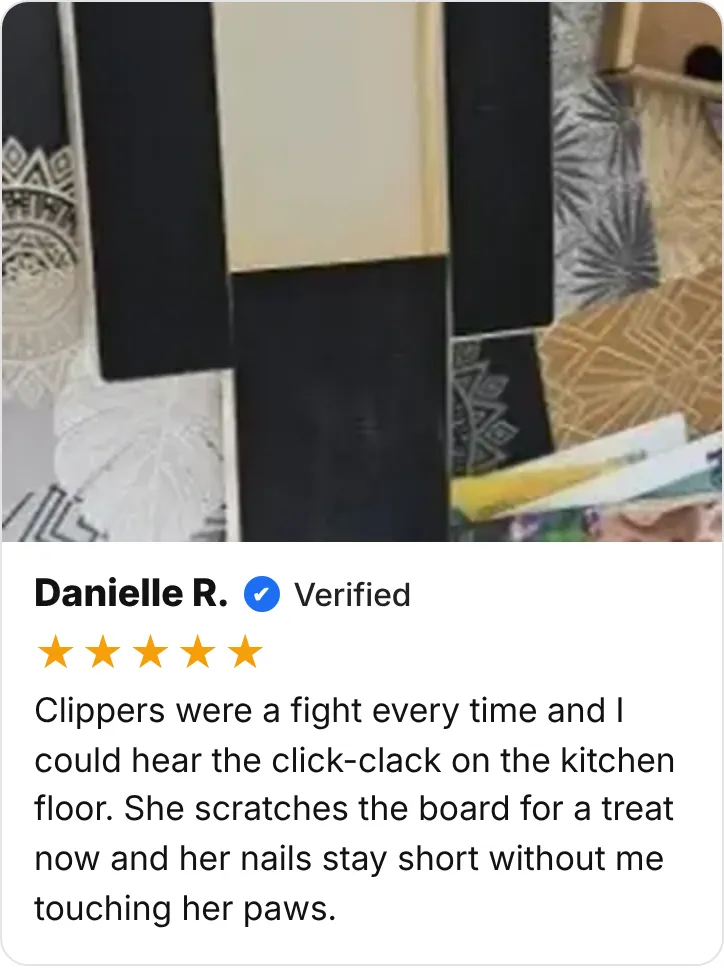
What Other Owners Are Saying
The Black Friday Price Ends December 1
ClawBud is 33% off with free gifts for Black Friday, and the sale ends on December 1. ClawBud is only sold on its own website, so that's where I ordered Tucker's.
Dr. Combs told me the owners she sees who have two dogs are ordering one scratch board for each dog, so each dog gets his own treat compartment.
Dr. Combs told me the one to three years start counting the first time you hear the click. I had been hearing that click for eight months without knowing what it meant.
See If The Black Friday Price Is Still On →
Every ClawBud scratch board comes with a 90-Day Money-Back Guarantee. If your dog won't dig at it, send it back and get every penny back.
Shipping is free. You literally have nothing to lose.
Tonight, close your eyes and listen to your dog walk across your kitchen floor. If you hear the click, now you know what it means. About three weeks on a ClawBud scratch board, and you'll hear it get softer.
References
The sources below are for general information. Results may not occur in every dog. This information is not a substitute for a visit to your veterinarian.
- AKC Canine Health Foundation. Feet on the Ground. https://www.akcchf.org/educational-resources/library/articles/feet-on-the-ground.html
- American Kennel Club. How to Trim Dog Nails Safely. https://www.akc.org/expert-advice/health/how-to-trim-dogs-nails-safely/
- VCA Animal Hospitals. Nail Trimming for Dogs. https://vcahospitals.com/know-your-pet/nail-trimming-for-dogs
- Purdue University Center for Animal Welfare Science. How to Trim a Dog’s Nails. https://caninewelfare.centers.purdue.edu/resource/how-to-trim-a-dogs-nails
- Dogs Trust. How to Clip Your Dog’s Nails. https://www.dogstrust.org.uk/dog-advice/health-wellbeing/at-home/nails
- Dog Aging Project. Mobility Tips and Tricks for Senior Dogs. https://dogagingproject.org/mobility-tips-and-tricks-for-senior-dogs
- Grey Muzzle Organization. Improving Canine Mobility: An Interview with Dr. Julie Buzby, DVM. https://www.greymuzzle.org/resources/health-and-well-being-authors-and-interviews-care-author/improving-canine-mobility
- PDSA. How to Clip Your Dog’s Nails. https://www.pdsa.org.uk/pet-help-and-advice/pet-health-hub/other-veterinary-advice/how-to-clip-your-dog-s-nails
- University of Minnesota. Canine Claw Disorders. Animal Dermatology. https://open.lib.umn.edu/animaldermatology3/chapter/1b-canine-claw-disorders/
- PetMD. How To Trim Dog Nails. https://www.petmd.com/dog/general-health/how-to-trim-dog-nails
- VCA Animal Hospitals. Degenerative Joint Disease in Dogs. https://vcahospitals.com/know-your-pet/degenerative-joint-disease-in-dogs